Khair Always In shaa Allah!

How to Create Emotional Safety for Yourself and Others
Emotional safety helps people feel seen, heard, and supported enough to begin healing. This post explores simple ways to create safety for yourself and others through listening, patience, dignity, compassion, and faith-aware care.
TRAUMA, SAFETY & HEALINGMENTAL HEALTH & EMOTIONAL WELLNESS
Hauwau Bello
4/3/20268 min read
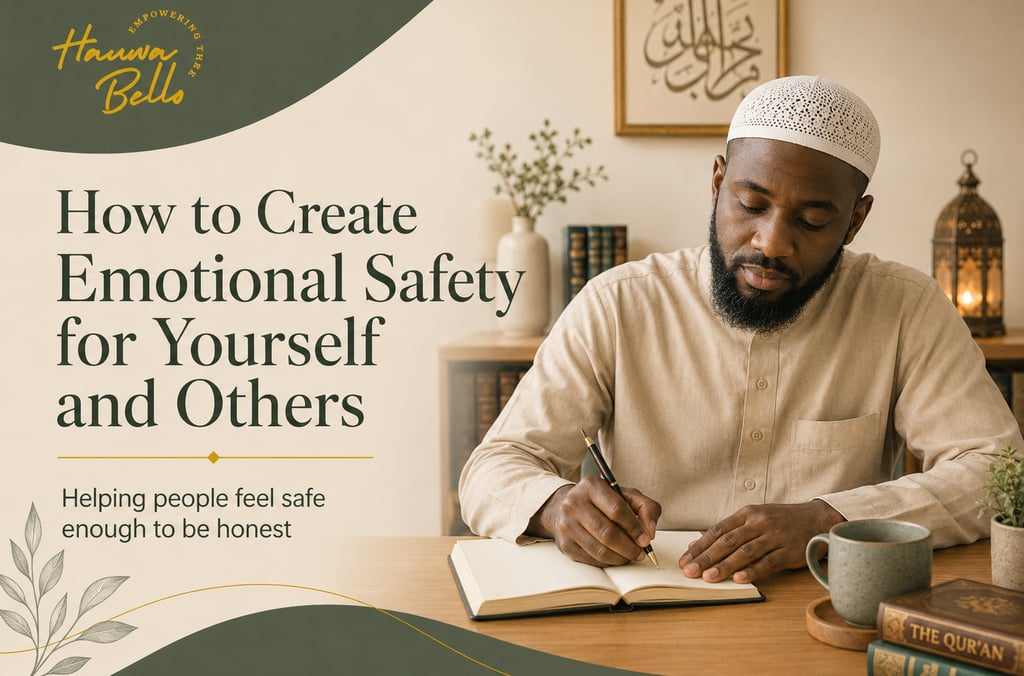
Emotional safety is built through the way we listen, respond, protect dignity, and make room for truth without shame.
In the first post, we explored why emotional safety matters before healing can begin. We looked at how people often need safety before they can speak, reflect, process pain, or receive support.
But emotional safety is more than an idea. It is something we can practise.
It is created in the way we speak to ourselves.
It is created in the way we respond to someone who is hurting.
It is created in the way families handle difficult conversations.
It is created in the way spouses listen to one another.
It is created in the way faith communities respond to people carrying pain.
Many people long for emotional safety, but they may struggle to name what it looks like. They may know what it feels like to be dismissed, rushed, blamed, mocked, or shamed. They may know what it feels like to hide their pain because the people around them cannot hold it with care.
But they may not yet know what safety sounds like, how to create it for themselves, or how to offer it to others.
This matters because healing is rarely sustained by one big moment. More often, healing is supported by repeated small moments of steadiness, compassion, honesty, and care.
Emotional safety is built slowly. One response at a time.
What Emotional Safety Sounds Like
Emotional safety often begins with simple words spoken with sincerity.
It may sound like:
"I am listening."
"Thank you for trusting me with this."
"You do not have to explain everything at once."
"We can take this slowly."
"What do you need right now?"
"I can see that this has been painful for you."
"You are allowed to feel this."
"Let us think about the next safe step together."
These words may look simple, but to someone who is used to being dismissed, they can feel deeply healing.
A person who is hurting may already be carrying fear. They may be afraid of being judged, of being called dramatic, of their pain becoming gossip, of religious language being used to silence them instead of support them, of becoming a burden.
So when they finally speak, the first response matters. A calm first response can help the person feel held. A rushed first response can make them close up again.
We do not always need the perfect thing to say. Often the safest response is simply to slow down and be present.
"I am here with you."
That sentence alone can be powerful when it is honest.
What Emotional Safety Feels Like
Emotional safety is not only about words. It is also about the atmosphere we create.
It can be felt in a calm tone of voice, in patient silence, in privacy. It can be felt when someone listens without interrupting, when a person's story is handled with dignity, when someone stays steady instead of becoming dramatic, angry, defensive, or dismissive.
Many people think support means giving advice immediately. But often, support begins with helping the person feel that their pain has landed somewhere safe.
Before advice, there is listening.
Before solutions, there is understanding.
Before correction, there is connection.
Before asking, "What will you do now?" it may be wiser to ask, "How are you feeling right now?"
The body often knows when it is safe. A person may breathe more easily. Their shoulders may relax. Their voice may soften. Their thoughts may become clearer. They may begin to say what they have been holding back.
This is why emotional safety matters. It helps the person move from guarding themselves into honest reflection.
How to Create Emotional Safety for Yourself
Sometimes we are waiting for others to create safety for us, and yes, supportive relationships matter. But part of healing also involves learning how to create small pockets of safety within our own lives.
This begins with noticing.
Notice where you feel tense. Notice the people you shrink around. Notice the conversations that make you feel ashamed, confused, or afraid. Notice the places where you keep explaining yourself but still feel unheard. Notice the relationships where your pain is repeatedly minimised.
Your body often gives you information before your mind can explain it clearly. You may feel tightness in your chest. You may feel your stomach turn. You may feel the urge to go quiet. You may become overly apologetic. You may feel pressure to smile when you are actually hurting.
These signals are worth paying attention to.
A gentle question to ask yourself is:
"What would help me feel safer right now?"
The answer may be simple. You may need rest. You may need privacy. You may need to pause a conversation. You may need to speak with someone trustworthy. You may need to journal before responding. You may need to pray two raka'at and ask Allah for clarity. You may need to book a therapy session. You may need to step away from people who keep dismissing your pain.
Creating emotional safety for yourself means learning to honour your emotional limits with wisdom, not cutting everyone off or avoiding every difficult conversation.
Some conversations need timing. Some people need boundaries. Some pain needs professional support. Some wounds need gentleness before they can be spoken aloud.
You can begin by giving yourself permission to say:
"This is painful."
"I need care."
"I need time."
"I need support."
"I need to speak to someone who can hold this with maturity."
That kind of honesty is part of healing.
How to Offer Emotional Safety to Someone Else
When someone trusts us with their pain, we are being given something delicate.
This could be a child, spouse, friend, sibling, client, student, parent, neighbour, or member of our community. The person may come with tears, with anger, with confusion, with silence. They may come with a story they have rehearsed many times in their mind but never said out loud.
The way we respond can either help them feel safer or make them retreat.
To offer emotional safety, start by listening before advising. Many of us are quick to explain, correct, or fix. We want to help, but we may move too fast. A person in pain may need to feel understood before they are ready for suggestions.
You can say:
"Tell me what feels most important for me to understand."
Or:
"Would you like me to just listen first, or would you like us to think through what to do?"
This gives the person some choice. And choice matters, especially when someone has felt powerless.
Protect their privacy. Pain should not become gist. Someone's story should not be carried from one family sitting room to another, from one WhatsApp group to another, or from one community discussion to another. When someone opens up, their dignity must be protected.
Stay calm. If someone shares something painful, your own shock, anger, or fear may rise. That is understandable. But the person who is hurting still needs steadiness. A calm response helps them feel that their pain can be held.
Avoid blame. Questions like "Why did you allow it?" "Why didn't you speak earlier?" "What did you do?" or "Are you sure?" can deepen shame. There may be a time to understand details, but first, the person needs care.
Respect their pace. Some people can speak clearly. Others speak in fragments. Some cry. Some sound detached. Some change the topic. Some need several conversations before they can say what really happened. Safety allows truth to unfold at a bearable pace.
Offer practical support. Sometimes emotional safety also needs practical help. That may mean helping the person find a therapist, accompanying them to a trusted professional, helping them think through next steps, or supporting them to rest, eat, sleep, or feel less alone.
Be consistent. Many people receive attention during the first disclosure, then everyone moves on. But healing often needs steady support after the first conversation. A simple message days later can matter:
"I am checking on you. How are you today?"
Consistency tells the person, "You still matter after the crisis moment."
Emotional Safety in Marriage and Family Life
Emotional safety is especially important in marriage and family life because these are the spaces where people are most vulnerable.
A spouse may need to say, "I feel lonely."
A child may need to say, "I am scared."
A teenager may need to say, "I am struggling."
A parent may need to say, "I am overwhelmed."
A sibling may need to say, "That hurt me."
When these conversations are met with anger, mockery, withdrawal, or blame, people learn to hide. They may still remain physically present in the home, but emotionally, they begin to move away.
In marriage, emotional safety allows repair. It helps a husband and wife talk about difficult things without every conversation becoming a fight. It allows both spouses to take responsibility without collapsing into shame or defensiveness.
In parenting, emotional safety helps children and teenagers bring their struggles before they become bigger problems. A child who feels safe is more likely to speak. A teenager who feels safe is more likely to seek guidance. A home where children can speak respectfully and honestly is a home where parents have more opportunity to guide.
Discipline, values, responsibility, and correction all remain, offered in a way that keeps dignity intact.
A child can be corrected with firmness and still feel loved.
A spouse can be held accountable and still feel respected.
A family member can be challenged and still feel valued.
Safety and responsibility can live together.
Emotional Safety and Accountability
Some people worry that emotional safety means people will avoid responsibility. True emotional safety supports responsibility.
When people feel attacked, they often defend themselves. When people feel shamed, they often hide. When people feel humiliated, they often shut down. But when people feel safe enough to face truth, they are more likely to reflect honestly.
This is why emotional safety is so important in therapy, marriage, parenting, leadership, and community life. It creates a space where truth can be spoken with wisdom.
Accountability without compassion can become harsh. Compassion without accountability can become avoidance. Healthy healing needs both.
We can say:
"What happened matters."
"What you feel matters."
"What needs to change also matters."
This balance protects the purpose of emotional safety. It helps people face reality with dignity, courage, and support, never as an excuse for harmful behaviour.
Faith, Mercy, and the Amanah of Another Person's Pain
For us as Muslims, emotional safety is not just a psychological idea. It connects deeply with mercy, amanah, and the dignity Allah has given to human beings.
When someone brings us their pain, we are being trusted.
Their words are an amanah.
Their vulnerability is an amanah.
Their dignity is an amanah.
Their privacy is an amanah.
The Prophet ﷺ showed gentleness, patience, wisdom, and mercy in the way he dealt with people. He corrected people, but his correction was rooted in compassion, never humiliation. He guided people while holding their dignity close. His presence gave people room to come close, ask, admit, learn, and change.
That is a powerful model for us.
In our homes, therapy rooms, schools, marriages, and communities, we should ask ourselves:
Do people feel safe enough to tell the truth here?
Can someone bring pain here and still be treated with dignity?
Do our words open hearts or close them?
Do we protect people's privacy?
Do we respond with mercy and wisdom?
Creating emotional safety is part of how we honour the trust Allah places in our relationships.
A Gentle Practice for the Reader
Take a moment and ask yourself:
Where do I feel emotionally safe? Who helps me feel calm, respected, and honest?
Where do I feel guarded? What kind of support do I need in this season of my life?
Who may need emotional safety from me? Is there someone I need to listen to more gently?
Is there a conversation I need to approach with more patience?
Is there a pain I have been rushing myself to "get over," when what I really need is care?
These questions are invitations to pay attention, not to blame yourself.
Healing often begins when we become honest about what we need and intentional about what we offer others.
Closing: Let Your Presence Become a Safe Place
Many people are carrying pain quietly. Some are functioning well but hurting deeply. Some are smiling in public and breaking down in private. Some are praying, working, parenting, studying, serving, and showing up while still longing for one safe place to be honest.
We cannot fix every pain people bring to us. But we can choose to become more careful with people's hearts.
We can listen before we advise.
We can protect dignity.
We can reduce shame.
We can hold truth with mercy.
We can help people find the right support.
We can create homes, marriages, therapy spaces, classrooms, and communities where pain is met with care instead of dismissal.
Sometimes, emotional safety begins with one person choosing to respond differently.
One calmer voice.
One patient conversation.
One protected story.
One sincere apology.
One gentle question.
One safe room.
One reminder that says:
Your pain matters, and you do not have to carry it alone.

Hauwa Bello, psychotherapist
My office
No 7, Christian Chukwu Street, 1421 Road, Gwarinpa Estate. Gwarinpa. Abuja. FCT