Khair Always In shaa Allah!

Fajr, Morning Light, and the Sunnah of Longevity
In our last discussion, we explored how the cold water of Wudu acts as a "biological reset." Today, we look at what happens after the prayer. In the wisdom of the Prophet (ﷺ), we find a morning routine that modern longevity experts are only just beginning to decode: the power of light, movement, and the "Fajr-to-Sunrise" bridge.
Hauwa Bello
1/23/20264 min read
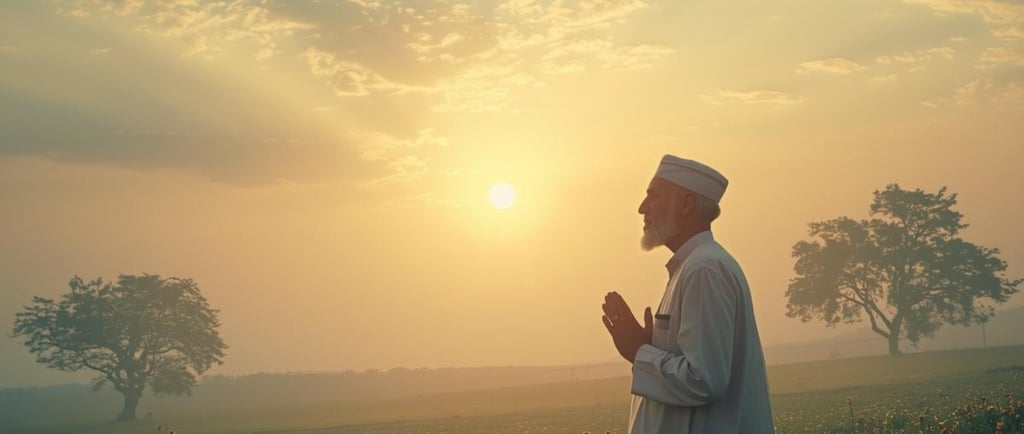
Last week, we explored wuḍū’ through a new lens: not only as purification and worship, but also as a gentle, embodied practice that supports whole-person health. Today, I want to build on that—because I came across something else that felt deeply familiar, and honestly… breathtaking in its simplicity.
If Muslims follow the Sunnah of the Prophet ﷺ and the ways Allah has guided us to live—Wallahi—these practices not only nourish spiritual health. They also support physical, emotional, and psychological well-being in ways modern science keeps confirming.
The rhythm of worship often mirrors what the body needs to thrive.
The Sunnah that quietly trains your body clock
We already know the rhythm:
You wake.
You make wuḍū’.
You pray Fajr.
And there is a well-known encouragement—especially for men who attend the masjid—to remain after Fajr, engage in adhkār, and wait until sunrise for greater reward. Alongside that, the Sunnah encourages walking to the masjid and walking back.
What this creates (almost effortlessly):
Early morning wake time
A calm, grounded period of remembrance
Movement (walking)
Exposure to morning light
These are the same anchors circadian and sleep researchers describe as foundational for long-term health.
Fajr builds in wakefulness, remembrance, movement, and morning light—without chasing “wellness.”
Morning light is not just “brightness”—it’s information
When light enters the eyes, it activates specialised cells in the retina called intrinsically photosensitive retinal ganglion cells (ipRGCs). These cells contain melanopsin and are designed less for sight and more for timing.
They send a signal to the brain’s master clock (the suprachiasmatic nucleus, SCN), essentially telling your body:
“It’s daytime now.”
This helps the body:
reduce melatonin (sleepiness hormone)
increase alertness and focus
stabilize mood and energy
set the timing for sleep later
One of the most practical insights from circadian research is this: morning light starts a timer. Roughly 12–14 hours later, the body naturally begins shifting toward winding down again.
By catching morning light, you’re not only improving your morning—you’re supporting your night.
The quiet “longevity combo”: light + walking
There’s a second pillar health science emphasizes again and again: steady, consistent walking.
Longevity research supports regular walking for cardiovascular health, metabolic health, and psychological well-being. And circadian alignment isn’t only about sleep and energy—when the body clock is anchored through early waking, morning light, and steady movement, it also supports healthier metabolic signalling.
Circadian disruption has been linked with worsened insulin sensitivity and inflammation, and increased cardiovascular strain (including blood pressure regulation). So the Sunnah pattern—Fajr, light, remembrance, and walking—doesn’t only “feel good.” Over time, it supports the systems that influence weight regulation, glucose handling, and vascular health.
Now connect that back to the Sunnah:
Walk to the masjid.
Walk back.
Do it consistently.
And if you remain until sunrise and then leave, you’re walking at the exact time the body benefits from that light signal most.
A routine that strengthens the heart, steadies the mind, regulates the body clock, and nourishes the soul—together.
“But what about Muslim women who pray at home?”
This is where the mercy and flexibility of Islam shines.
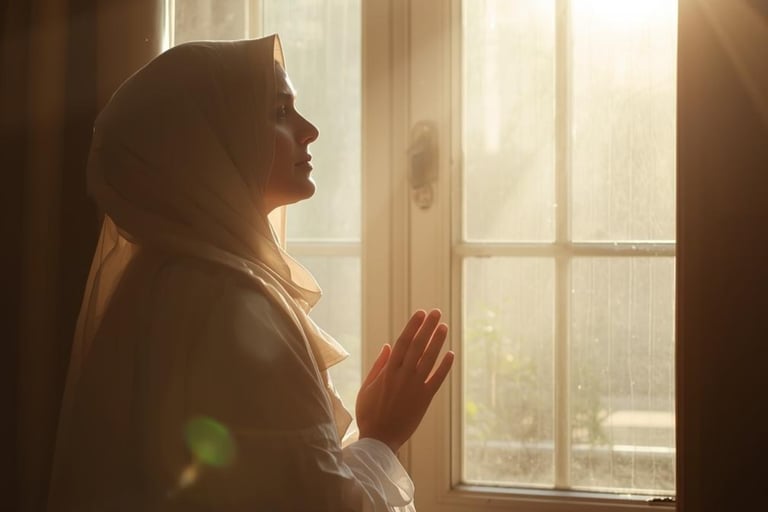
Not every woman goes to the masjid for Fajr—and many choose (or need) to pray at home. But the benefit is still accessible.
Science gives a simple suggestion:
Place yourself near morning light.
Open a window or sit by a bright doorway
Spend 10–20 minutes near that morning brightness
Let the light reach your eyes naturally while you recite adhkār, reflect, or begin your day gently
Many women already do this without naming it:
after Fajr and adhkār, stepping into the kitchen
preparing the home for the day
moving between rooms with daylight pouring in
stepping outside briefly for a morning task
If your kitchen window is in front of you as you prepare breakfast—SubḥānAllāh—you’re getting the benefit while living your life.
You don’t have to “optimize” your morning—just open the curtains and stay present.
Why going back to sleep after Fajr often backfires!
This is also why the Islamic discouragement of “going back to sleep after Fajr” makes so much sense when you view it through the lens of regulation.
After Fajr, your body is transitioning.
Your circadian system is receiving signals.
Your alertness chemistry is rising.
When you go back to sleep right after that shift, many people experience:
grogginess (sleep inertia)
heavier fatigue later
mood dullness
difficulty feeling “started”
Of course, there are exceptions—new mothers, the sick, those who worked overnight, and anyone genuinely sleep-deprived. Islam is not harsh. But as a general lifestyle pattern, staying up after Fajr supports clarity, rhythm, and productivity for many people.
After Fajr, your system is already turning “on.” Going back to sleep can scramble that transition.
A gentle, practical invitation
If you want to live this Sunnah with more intention—without turning your worship into a performance—try this:
After Fajr:
sit for adhkār and let your nervous system settle
allow some morning light into your eyes (window or outdoors)
add light movement: walk to the masjid, walk around your compound, or simply pace gently while reflecting
Not extreme.
Not complicated.
Just aligned.
Ramadan is a beautiful time to begin. Many scholars describe Ramadan as a training ground—small, repeated acts done consistently until they become your normal. Start gently: stay awake after Fajr when you can, sit for adhkār, receive morning light (outside or by a bright window), and add a short walk. Then carry the habit forward after Ramadan—because consistency is where the real change happens.
This is why the Sunnah is not only beautiful—it is wise.
Islam doesn’t only guide us toward the ākhirah; it teaches rhythms that support the dunyā too:
waking with purpose
purifying with water
orienting the heart through prayer
grounding the body with movement
receiving the morning light that helps regulate the whole system
So no, peeps… no casual “back to sleep after Fajr” if you can help it.
Prime your life spiritually—and holistically.
SubḥānAllāh. Isn’t Islam perfect?
Subscribe to our Blog
Subscribe to our blog for valuable resources on mental health, self-care, and personal development. Get insightful content to navigate mental health complexities and receive updates on new posts. Join our supportive community to discuss and learn about critical mental health topics.
Start your journey to a healthier, happier life by subscribing today!

Hauwa Bello, psychotherapist
My office
No 7, Christian Chukwu Street, 1421 Road, Gwarinpa Estate. Gwarinpa. Abuja. FCT